
[ad_1]
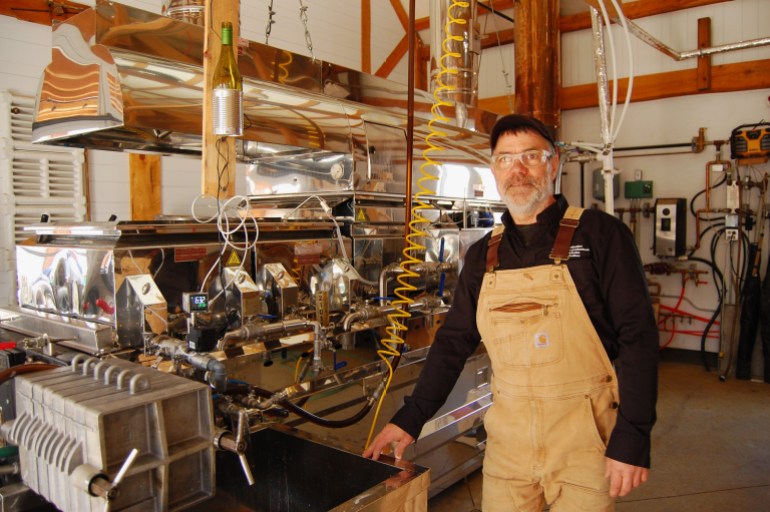
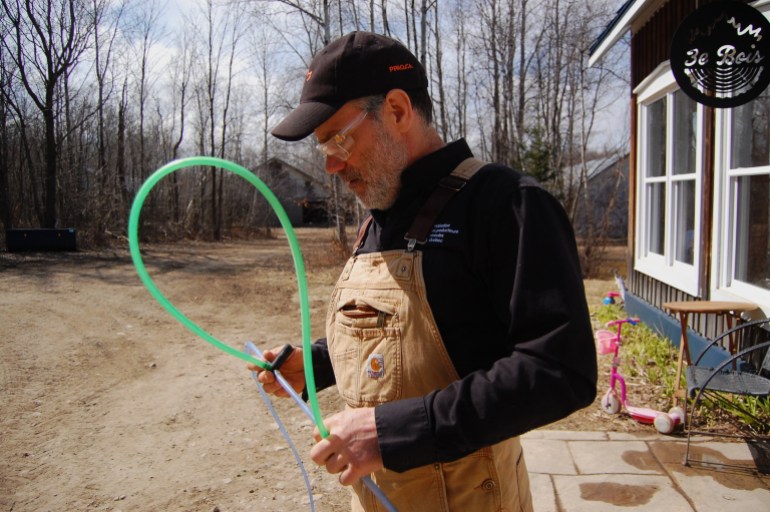
Saint-Urbain-Premier, Quebec, Canada – In clear security glasses and heavy beige overalls, Jean-Francois Touchette is in his ingredient.
Throughout him are pipes, tubes, temperature gauges and numerous buzzing devices: all of the equipment wanted to show tree sap into maple syrup.
Touchette’s syrup operation is a small one, run out of a modest, two-storey wood constructing on the finish of an extended grime driveway in rural Quebec.
However as winter turns to spring, Touchette — like 1000’s of different maple growers within the Canadian province — faces stress to gather, boil and bottle his harvest.
“It’s a small manufacturing unit. I’m actually at a small scale, but it surely’s the identical, identical, identical [setup] as the larger ones,” he instructed Al Jazeera on a sunny morning in early April, one of many final days of this 12 months’s maple season.
“I produce 650 gallons [about 2,500 litres] a 12 months — 15, 17 barrels.”
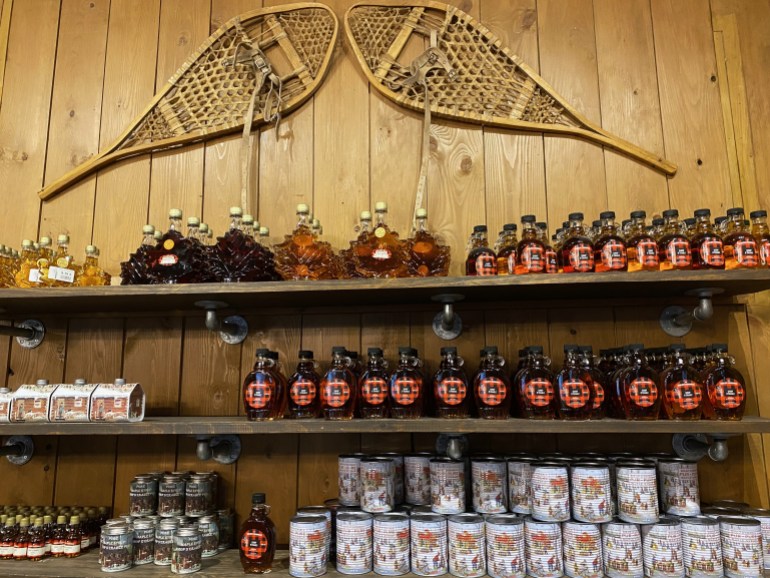
Maple syrup is one in every of Quebec’s most iconic merchandise: No different nation or province produces as a lot of the sticky, candy topping, usually drizzled on pancakes or heat waffles.
However a shifting maple syrup season, pushed partly by local weather change, has created challenges for the trade.
In 2023, Quebec produced 35.6 million litres (9.4 million gallons) of maple syrup — down 41.4 p.c from the earlier 12 months, in line with knowledge from Statistics Canada.
As temperatures develop extra erratic and winters shorten, Quebec’s syrup producers have been compelled to adapt to the altering circumstances and alter their operations accordingly.
“We have now to faucet the timber earlier, and in February, now we have to be prepared. That’s what it’s introduced, local weather change: It’s shifting the season,” Touchette mentioned.
A cycle of freezing-unfreezing
Local weather change has a direct impression on the window of time farmers like Touchette have to collect sap, the candy substance that helps timber transport water and vitamins from their roots to their leaves.
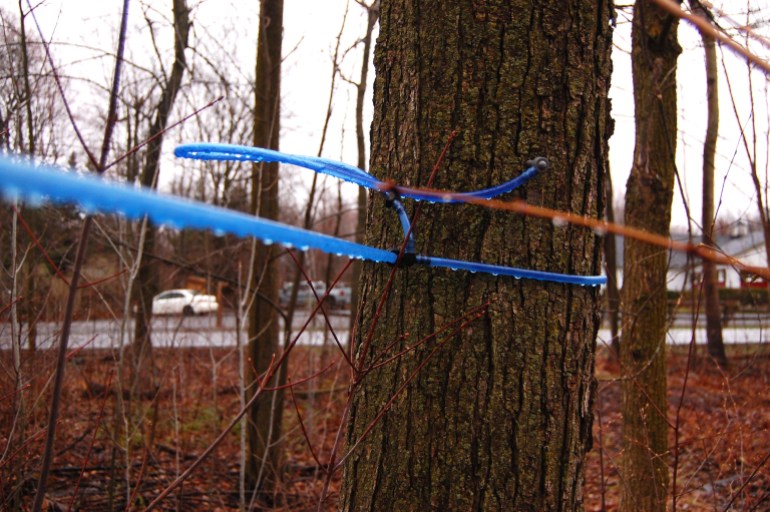
The springtime cycle of freezing temperatures at evening — and hotter climate throughout the day — produces stress inside maple timber. That build-up of stress, in flip, permits sap to movement from the tree when its trunk is tapped or pierced for syrup-making.
Advances in expertise have boosted maple syrup manufacturing in latest many years. These days, there are vacuums to attract sap out and pc methods to pinpoint any disruption within the tubes that join timber to one another in a maple grove.
However the climate stays key to making sure a profitable harvest.
“It takes a selected cycle of freezing-unfreezing,” defined Sergio Rossi, a professor of forest ecology at Universite du Quebec a Chicoutimi (UQAC) within the province’s Saguenay–Lac-Saint-Jean area.
If Quebec sees extended, uninterrupted stretches of subzero temperatures — or, against this, hotter climate — that would set again syrup manufacturing as a result of it interrupts that crucial cycle, Rossi instructed Al Jazeera.
“It’s a bit like whenever you go fishing. You possibly can exit at some point, and also you’re capable of get haul. Generally you go, and also you come dwelling with nothing,” he mentioned. “Maple syrup works a bit of bit like that.”
A light winter
This 12 months, a comparatively gentle winter meant that Quebec’s maple syrup season started in mid-February throughout the province — weeks sooner than traditional.
Fluctuations within the season, linked to local weather change, have made harvests extra unpredictable, Rossi mentioned. Meaning producers have to be prepared to gather the sap every time the climate adjustments.
However bigger operations may have a harder time adjusting their schedules, given the time and staffing wanted to faucet huge groves.
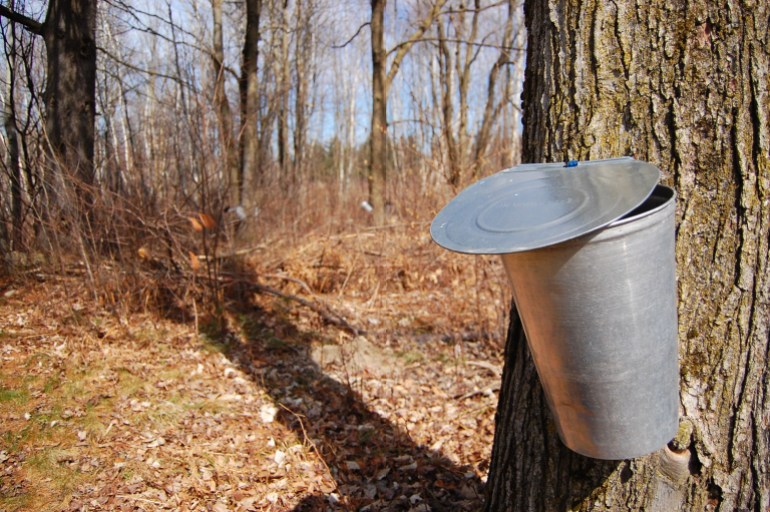
“You probably have two maple timber in your yard and also you need to connect a bucket to provide a bit of little bit of maple syrup to boil at dwelling”, tapping these timber will take just a few minutes, Rossi defined.
“However in the event you’re a big producer that has 500, 1,000, 10,000, 100,000 [trees], which means 100,000 maple timber to faucet. You possibly can’t make that call on the final minute. It’s a must to put together upfront.”
An earlier begin date for maple syrup manufacturing additionally raises questions round whether or not the seasons will shift however stay the identical length, or if they may get longer or shorter.
That has raised extra questions for researchers resembling Rossi. May adjustments to the season have an effect on the quantity of sap timber produce? May it have an effect on the quantity of sugar the sap accommodates and its total high quality?
Shifting climate patterns may additionally alter which areas are finest suited to maple syrup manufacturing, Rossi added. If the native local weather adjustments considerably, some farms the place syrup has been produced traditionally could now not be viable.
World’s solely stockpile
Nonetheless, with an abundance of maple timber and a local weather that’s beneficial to manufacturing, Quebec stays the most important maple syrup producer in Canada.
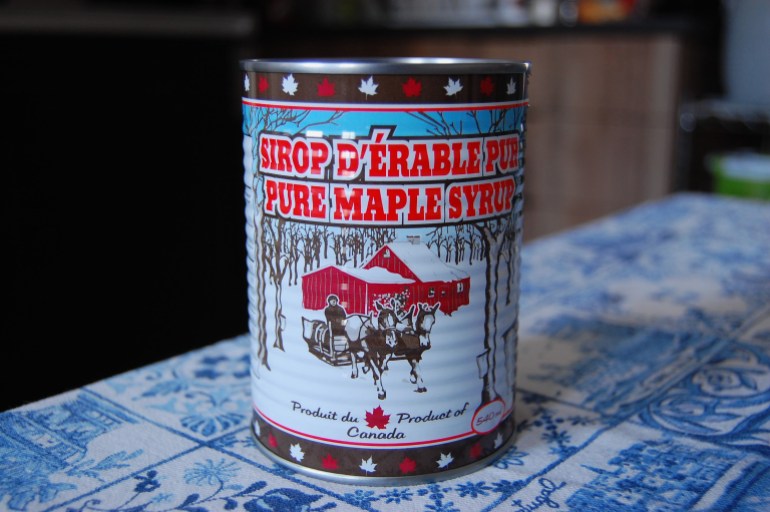
The French-speaking province prides itself on the billion-dollar trade, which accounts for greater than 70 p.c of the worldwide provide of maple syrup.
Its enterprise mannequin consists of the world’s solely maple syrup reserve. That stockpile — often called the Strategic Reserve — is managed by an organisation that represents 13,000 producers within the province, referred to as Producteurs et productrices acericoles du Quebec (PPAQ) or Quebec Maple Syrup Producers.
The PPAQ oversees a quota system that regulates how a lot maple syrup every producer could make yearly and the way a lot goes out available on the market. It makes use of the reserve to maintain provides regular, in case unpredictable temperatures or different components dampen manufacturing.
The stockpile additionally helps to make sure that home and overseas markets don’t face shortages. Most of what will get made in Quebec finally ends up south of the border in the US or in different overseas markets resembling France, Germany and the UK.
And through the years, Quebec’s maple syrup reserve has intrigued folks each throughout Canada and all over the world.
In 2012, for example, authorities found that greater than 9,500 barrels valued at greater than $13m ($18m Canadian {dollars}) had been stolen from a Strategic Reserve warehouse and changed with water.
Greater than a dozen folks have been arrested for his or her roles within the “Nice Maple Syrup Heist”, and the convicted mastermind behind the scheme was ordered to pay again the greenback quantity he had bought the syrup for — greater than $6.5m ($9m Canadian {dollars}).
A historic low
However the reserve made headlines in recent times for one more motive: its plummeting provides.
The drop got here as international demand for maple syrup shot up throughout the COVID-19 pandemic and manufacturing dipped because of the climate and different environmental components.
Whereas the PPAQ was capable of dip into the Strategic Reserve to maintain provides constant throughout the slowdown, the stockpile now sits at its lowest stage in additional than 15 years, defined Joel Vaudeville, the group’s communications director.
A 12 months in the past, the reserve housed almost 16 million kilogrammes (35 million kilos), unfold throughout three warehouses within the Centre-du-Quebec and Chaudiere-Appalaches areas of the province.
In the present day, nevertheless, the reserve counts solely 3.1 million kilos (6.9 million kilos) of maple syrup — a historic low that drew worldwide headlines.
“It’s actually about what Mom Nature brings us every spring,” Vaudeville instructed Al Jazeera in a cellphone interview in late March.
“Our window for manufacturing is just 5 to seven weeks lengthy,” he mentioned. “After we lose manufacturing days due to unfavourable temperatures, in fact it makes an enormous distinction for us.”
Hopeful outlook
Regardless of the hurdles, producers are hopeful that 2024 will yield higher outcomes than previous seasons.
“In mid-February, we have been anxious,” Vaudeville mentioned. “We didn’t have any indication of whether or not we’d have season of maple syrup manufacturing, and we knew shares have been much less and fewer accessible each on the Strategic Reserve and on the processing aspect.”
However that modified by late March, he defined, and Quebec maple syrup producers predict haul to assist replenish the reserve.
“It’s too early to do an total evaluation, however we are able to say with confidence that we’ll make much more syrup than final 12 months,” Vaudeville mentioned. Having 45 million kilos (100 million kilos) of maple syrup, he added, would put the reserve at a “snug” stage.
He mentioned the PPAQ is attempting to spice up manufacturing capability too. Between now and April 1, 2026, the organisation intends to place 14 million extra faucets in place to attract sap out of maple timber.
That represents 19 million kilos (42 million kilos) of potential syrup manufacturing, Vaudeville defined.
That manufacturing is essential to persevering with long-cherished traditions in Quebec. Whereas 85 p.c of Quebec maple syrup is exported, it stays a staple in lots of Quebec households.
Many Quebecers additionally participate in a maple-related highway journeys each spring: They go to a “cabane a sucre” — or sugar shack — to have a syrup-soaked meal and discover erablieres, the groves of maple timber the place the entire course of begins.
“Maple syrup for Quebecers is just like the Montreal Canadiens,” Vaudeville mentioned, referring to the skilled hockey staff. “In different phrases, it’s a part of our nationwide id.”
‘Effervescent’ harvest
That sense of nationwide satisfaction was echoed by Touchette, the maple syrup producer in Saint-Urbain-Premier, about 40km (25 miles) southwest of Montreal in Quebec’s Monteregie area.
“We’ve been bathing in maple syrup for a very long time,” he instructed Al Jazeera. “It’s the primary harvest of the 12 months, so it’s effervescent.”
Regardless of the challenges that local weather change can deliver — together with sturdy winds and ice storms that harm timber — Touchette mentioned 2024 was a mean season. “We gained’t break data. We’ll have harvest,” he mentioned.
As at all times, maple syrup manufacturing stays topic to the whims of nature, he added.
“That’s why now we have a standard market and a reserve, as a result of it’s the climate that governs. We have now to have the ability to soak up these manufacturing cycles,” he mentioned.
“In any other case, you’ll lose your house on the shelf, and folks will purchase one thing aside from maple syrup.”
[ad_2]